


I’ve spent a lot of time thinking about the weight we carry. Not the physical weight of a heavy coat or a packed gym bag, but the invisible kind. The kind that sits on your chest when you wake up at 3:00 AM, replaying a conversation from five years ago or a mistake you made when you "didn't know any better."
We often talk about the future with a sense of anxiety, but for many of us, the real battle is happening in the rearview mirror.
In our tradition, we’re taught that Shaytan approaches us from four directions: from the front, from behind, from the right, and from the left. I was recently reflecting on a concept often called the "attacks from behind." When Shaytan attacks from the front, he makes us worry about the future. But when he attacks from behind? He uses our past. He uses our sins, our trauma, and our old versions of ourselves to convince us that we are disqualified from the mercy of Allah.
He wants you to believe that your past is a prison. But I’m here to tell you: as someone who has felt those bars: that the door was never actually locked.
The Hook of the Past
Have you ever felt like you were finally making progress in your spiritual healing, only to have a memory hit you like a physical blow? Suddenly, you feel like a hypocrite for praying. You feel like a fraud for wearing a hoodie that says "Sabr" or "Light upon Light" when you know the darkness you once walked in.
This is the "attack from behind." It’s a tactical move to make you feel hopeless. If Shaytan can convince you that your identity is tied to your history rather than your current intention, he wins. He wants you to stay stuck in the "version" of you that didn't know how to handle pain, the version that made mistakes out of desperation or ignorance.
But in Islam, our identity isn't a fixed point in the past. It’s a living, breathing thing rooted in the present. It’s rooted in your Niyah.

Understanding Niyah: The Ultimate Reset
We often translate Niyah as "intention," but it’s so much deeper than just a thought. It’s the engine of the soul. It’s the conscious choice of the heart to turn toward the Creator.
The Prophet Muhammad ﷺ said, "Actions are but by intentions, and every man shall have only that which he intended."
Think about the radical freedom in that statement. It means that the "you" of yesterday: the one who stumbled: is not the "you" of this moment if your intention has changed. Your Niyah is a bridge. It bridges the gap between who you were and who you are becoming.
When we talk about overcoming past guilt, we aren't talking about erasing history. We’re talking about reclaiming our narrative. You aren't "the person who failed." You are "the person who is currently intending to grow." That shift in perspective is where real spiritual healing begins.
Why Minimalist Islamic Streetwear?
People often ask me why I started Sunnah Designs and why we focus on such a minimalist, understated aesthetic. For me, it was never about "shouting" my faith. It was about creating a quiet, constant reminder for the wearer.
When you put on a piece of minimalist Islamic streetwear, it’s an act of Niyah. You’re choosing to dress with a specific purpose. You aren't wearing a brand; you’re wearing a story. You’re wearing a commitment to yourself and to your Deen.
I remember when we were designing some of our core pieces, I wanted something that felt like a "gentle nudge." Something that, when you caught your reflection in a store window, reminded you of who you are now. Not who you were ten years ago.
Our Niyah intention apparel is built on this idea. It’s about the subtle power of being understated. You don't need to prove your transformation to the world with loud graphics. You just need to honor your internal change with honesty and wisdom.
Breaking the Bars of Guilt
Overcoming past guilt is a process, not a destination. It’s about recognizing that Allah's name is Al-Ghaffar (The Repeatedly Forgiving). He doesn't just forgive once; He forgives again and again.
If Allah is willing to forgive the past, who are we to keep ourselves imprisoned by it?
When those thoughts of "I'm not good enough" or "I've done too much wrong" come creeping in from behind, I want you to try something. Stop. Take a breath. And renew your Niyah. Right there. In the grocery store, in the car, or while you're sitting at your desk.
Say to yourself: "My intention right now is to seek His pleasure. My intention right now is to be better than I was a second ago."
That’s it. That’s the door opening.
Wearable Intentions
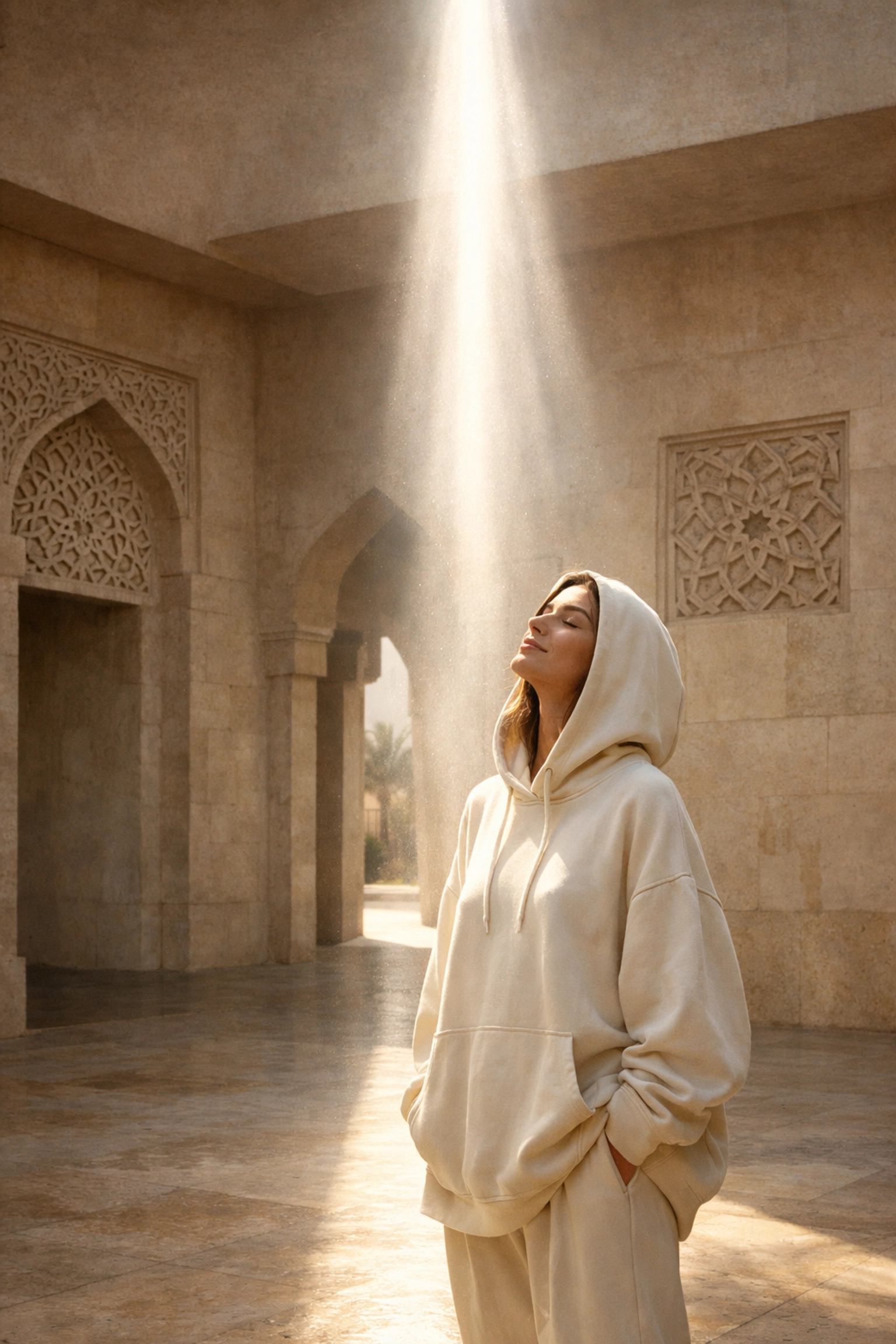
At Sunnah Designs, we try to create pieces that act as these small resets. For example, the Light Upon Light Unisex Hoodie is one of my favorites for this very reason. It’s a reminder that no matter how much darkness we've walked through, Allah can place light upon light within our hearts. It’s a symbol of a new beginning.
Similarly, our Sabrware collection isn't just about "patience" in the face of external trouble. It’s about the internal patience required to heal. It’s about having Sabr with yourself as you navigate the messy, non-linear path of spiritual growth.
Practicing Presence
How do we actually move forward? How do we stop the "attacks from behind" from landing?
- Acknowledge, Don't Dwell: When a past mistake comes to mind, acknowledge it happened, but don't invite it to tea. Say, "That was me then. This is my Niyah now."
- Daily Renewals: Make it a habit to renew your intention every morning. Our Tahajjud Alarm Clock is a great tool for this: not just for the prayer itself, but for reclaiming those quiet hours of the night when the past feels loudest. Use that time to talk to Allah about your growth.
- Physical Reminders: Whether it's a piece of jewelry, a specific scent, or your favorite Sunnah Designs hoodie, use physical triggers to bring your mind back to the present.
A Bridge Between Faith and Fashion
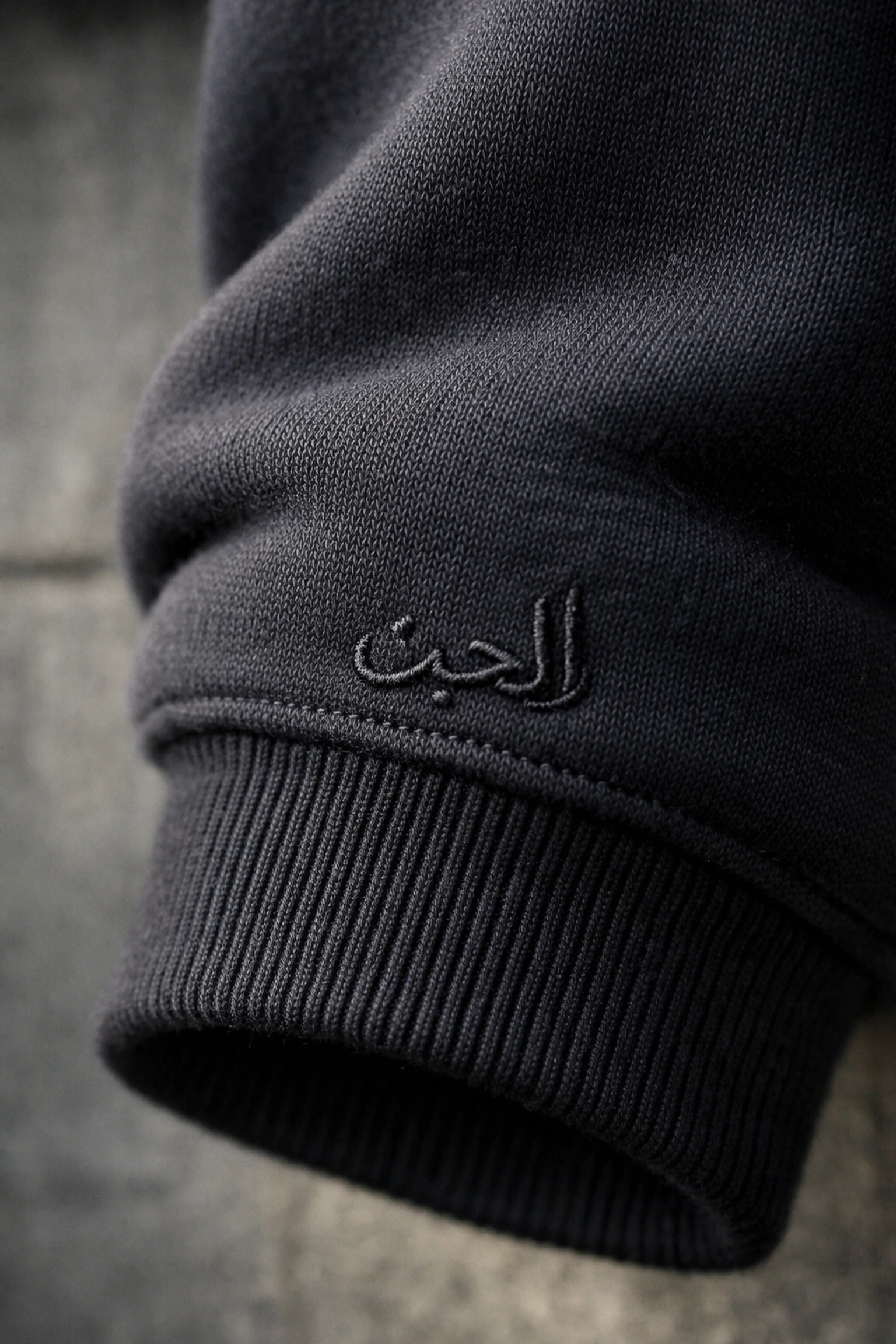
We aren't just selling clothes. We’re trying to facilitate unscripted, personal interactions: both with others and with yourself. When someone sees the subtle calligraphy on your sleeve and asks what it means, that’s a conversation starter. But more importantly, when you see it, it’s a conversation with your own soul.
It’s about bridging the gap between our traditional values and our modern lives. You can be sleek, you can be contemporary, and you can be deeply, unapologetically rooted in your faith. These things aren't mutually exclusive. In fact, they are beautiful when combined.

Your Journey is Not Over
The past is a lesson, not a life sentence. If you are breathing, if your heart is beating, then the opportunity for a new Niyah is still there.
I want you to look at your history not as a weight holding you back, but as the soil that allowed you to grow. You wouldn't be the person seeking spiritual healing today if you hadn't survived the person you were yesterday.
So, reclaim your intention. Wear your values with pride. Walk with your head up, knowing that while Shaytan may attack from behind, Allah is always with those who turn toward Him.
Your past is not your prison. Your Niyah is your freedom.
Act with intention. Grow with grace.

Looking for a daily reminder of your journey? Explore our latest collections and find the piece that speaks to your current Niyah. Whether it's the Sabr Short Sleeve Tee or a classic hoodie, let it be the bridge to your next chapter.